Showing posts with label Discussions. Show all posts

The harm of hate speech

by in 0

A member of the Westboro Baptist Church demonstrates outside the supreme court in Washington DC(Photo by Chip Somodevilla/Getty Images)
AJeremy Waldron, professor of social and political principle at Oxford University, argues the case for legislation in opposition to hate speech

A member of the Westboro Baptist Church demonstrates outside the supreme court in Washington DC(Photo by Chip Somodevilla/Getty Pictures)
A member of the Westboro Baptist Church demonstrates exterior the supreme court docket in Washington DC (Picture by Chip Somodevilla/Getty Photographs)

Principle four is something we can all applaud. However as Timothy Garton Ash’s commentary signifies, it raises further points that aren't conveyed in the formulation of the precept itself.  Should “talking brazenly” imply speaking without any authorized constraint, even when the speech is manifestly uncivil?  So the dialogue raises the difficulty of hate speech and the tough question about whether or not it's ever applicable to legislate towards it.

Read more »

Islam between free speech and hate speech

by in 0

Iranian cleric Mohsen Kadivar 
The execution of apostates ought to be annulled however insulting religion ought to be recognised as a crime, writes Iranian cleric Mohsen Kadivar.

Iranian cleric Mohsen Kadivar
Iranian cleric Mohsen Kadivar (Picture by Hamed Saber underneath a Creative Commons Attribution-only licence)

Initially, there should be a differentiation between Islam which relies on the principles of the Qur’an and the authentic tradition of the prophet and the sharia-oriented Islam. Within the first, the liberty of speech and faith has been recognised. Within the second, such freedom is faced with numerous limitations.

I. The restrictions of freedom of speech in sharia

In sharia-oriented Islam, an apostate can be executed. The insult and mockery of spiritual beliefs is punishable by death. Some jurists place the responsibility upon the masses to recognise and execute the two. In this model, punishments resembling Ta’zir and forceful imposition of adherence to non secular obligations and abstinence from spiritual prohibitions are permissible. Publicising every other sorts of religions and thought, even different Islamic sects and some philosophical and religious ideas of Muslim thinkers, are considered dangerous and therefore prohibited. The same is true of publicising books and other cultural merchandise, which are in any means thought of publicising of this sort.

Read more »

Freedom of speech and privateness

by in 0

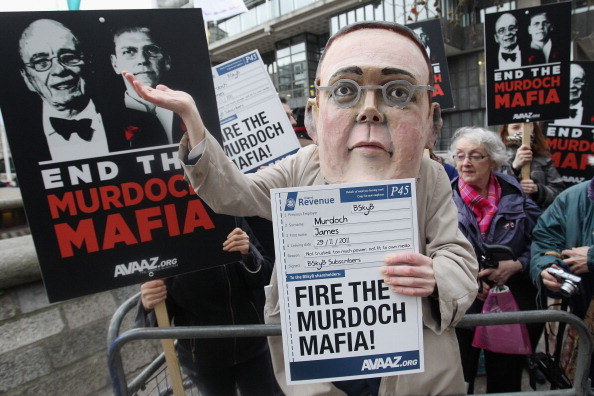
James Murdoch Faces Calls To Stand Down As Chairman Of BSkyB At Their AGM


Professor Eric Barendt of University Faculty London discusses the fragile steadiness between free speech and privacy.

Protesters show exterior the annual normal assembly of BSkyB to call for James Murdoch to face down as chairman on November 29, 2011 in London, England. The protests follow News International's telephone hacking scandal. (Photo by Oli Scarff/Getty Pictures)

Both freedom of speech and privacy are fundamental rights, that are equally recognised within the Common Declaration of Human Rights, by international conventions such as the European Conference on Human Rights, and in lots of nationwide constitutions. How do they relate to each other?

Read more »